Quick answer
Open source license management means tracking every open-source dependency in your codebase and the license it carries (MIT, Apache 2.0, GPL, and others), so you can confirm your use of that code is compliant. It's usually done with software composition analysis (SCA) tools like Snyk, FOSSA, or the open-source OSS Review Toolkit. This is a different problem from tracking the commercial software subscriptions and licenses your business pays for - that's what CostLoop is built for, and this guide explains the distinction.
"Open source license management" and "software license management" get confused constantly, because they share a word but solve genuinely different problems. This guide covers what open-source license management actually means, what tools handle it, and where the line is between that and the much more common small-business problem of tracking what software you pay for.
What open source license management actually means
Almost every modern codebase depends on open-source packages - hundreds or thousands of them, once you count transitive dependencies. Each of those packages ships under a license (MIT, Apache 2.0, BSD, GPL, LGPL, and dozens of others), and each license comes with its own obligations: some require you to preserve attribution, some require you to share modifications, and a few (like strong copyleft licenses) can impose real constraints on how you're allowed to distribute software that depends on them.
Open source license management is the practice of knowing which licenses are actually present across your dependency tree, and confirming your use of that code stays compliant with each one. For a small project this might be a manual review. For anything with a real dependency tree, it's normally handled by scanning tools rather than by hand.
How it's typically done
The standard approach is software composition analysis (SCA): a tool scans your dependency manifests and lockfiles (package.json, requirements.txt, go.mod, and similar), builds a full list of what you actually depend on including transitive dependencies, and flags the license attached to each one. Most SCA tools also flag known security vulnerabilities in the same pass, since the same dependency graph matters for both problems.
Names to know in this space include Snyk, FOSSA, Black Duck, and the open-source OSS Review Toolkit (ORT), among others - each with different depth of language support and reporting. Each project's own site and documentation is the right place to check current capabilities and pricing, since this is a space where features and terms change; we're not going to guess at numbers here.
Category and tool names last verified September 17, 2026.
Where this is a different problem from tracking software subscriptions
This is the distinction that trips people up. Open source license management is about compliance risk in the code you ship - it has nothing to do with what your business pays for commercial software. Tracking software subscriptions is the opposite kind of problem: not "what license does this dependency carry," but "what SaaS tools and paid licenses is my business paying for, when does each one renew, and are we paying for seats nobody uses."
If what you actually need is the second thing - a clear list of the commercial software and SaaS subscriptions your business pays for, with renewal dates and cancellation links in one place - that's a different category of tool entirely, and it's what CostLoop is built for. See software license tracking for the commercial-license side of this, or CostLoop's full feature list for subscription tracking generally.
If you're tracking commercial software licenses, not open-source compliance
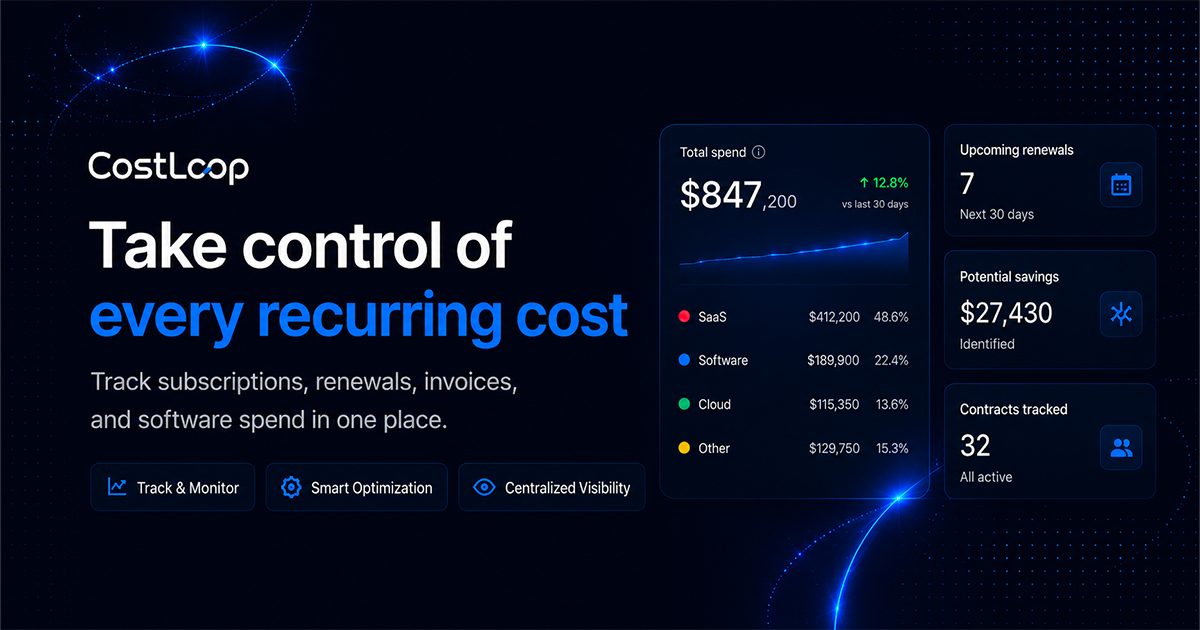
CostLoop tracks the licenses and subscriptions your business actually pays for: seat counts, assigned users, expiry dates, renewal reminders, and cancellation links, all in one dashboard. You add each subscription manually, import from a bank statement CSV, or use the Chrome extension that scans Gmail or Outlook for billing emails. It's free to start for up to 5 subscriptions, with paid plans unlocking unlimited subscriptions and a health score that flags licenses nobody's using. See the pricing page for plan details, or the software license management guide for the broader practice of managing paid licenses at a small or medium business.
Frequently asked questions
What is open source license management?
Open source license management is the practice of tracking every open-source dependency in your codebase and the license each one carries (MIT, Apache 2.0, GPL, and others), so you can confirm your use of that code complies with its license terms. It is typically handled with software composition analysis (SCA) tools that scan your dependency manifests and lockfiles.
What tools handle open source license scanning?
Common names in open-source license and dependency scanning include Snyk, FOSSA, Black Duck, and the open-source OSS Review Toolkit (ORT). Each takes a different approach to scanning dependency manifests and flagging license risk - check each project's own documentation for current capabilities and pricing.
Is open source license management the same as tracking software subscriptions?
No. Open source license management is about compliance risk in the code you ship - which OSS licenses your dependencies carry and whether your use of them is compliant. Tracking software subscriptions is a separate, commercial concern: what SaaS tools and paid software licenses your business pays for, when each one renews, and whether you're paying for seats nobody uses. CostLoop is built for the second problem, not the first.